
There is growing recognition of the importance of disciplinary literacy – reading the kinds of texts written in science, human ties and other academic disciplines (e.g. here, here). This is great. A great key to unlocking meaning in disciplinary texts is subject knowledge (here).
But subject knowledge is also key to developing great fiction readers.
In this post, I’m going to analyse an extract from the 2023 KS2 SATs reading paper.
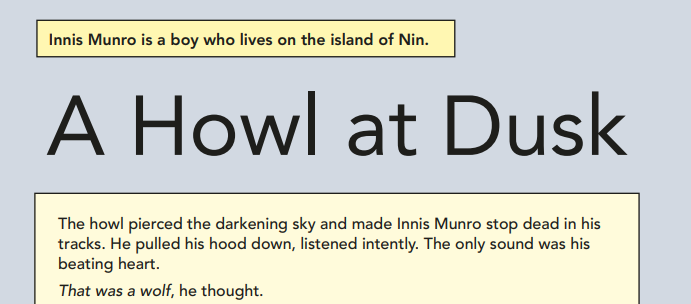
snip of the 2023 Reading SATs paper
Before we even start, I need to explain cohesion in a text. When the writer thinks they may lose the reader because of insufficient background knowledge, they can add the missing information to help. An example of cohesion is at the top of the image above: the author (or the exam setters) felt that readers might benefit from the additional context information. You often get strong cohesion in newspaper science articles. While cohesion is useful, it does add to cognitive load.
Primary teachers know all about the next term: inference. Readers need to infer additional information either by making links from other information in the text, or by adding their own background knowledge. A text that contained all of the information needed by every reader would be a terrible chore to read:
| Original Text | Text with enhanced cohesion |
| But it couldn’t have been. There were no wolves on the island of Nin, no wolves in Scotland any more, not for almost three hundred years. It was just a trick of the wind. | But it couldn’t have been a wolf because there are no wolves on the island of Nin, no wolves in Scotland, a country that since 1707 has been part of Great Britain which has beautiful landscapes including mountains and islands. The last wolf in Scotland was killed almost three hundred years ago and wolves have not been reintroduced there. The howling sound must have been the wind howling, which can sound eerily similar to a wolf’s howl. |
Strong readers need less cohesion and can make effective inferences using their own background knowledge.
| Possible relevant background knowledge | Likely inference the reader would make |
| Reasons why animals go extinct (hunting, changes to the environment etc.) | The reader might make the correct inference that the climate had changed on the island or that the wolves had been hunted as a pest. |
| Geographical / landscape knowledge about ‘bumpy and boggy’ landscapes (for example from a family holiday to the Peak District). | The boy in the story might be isolated and exposed. It can be difficult to move across this landscape. It can be frightening in bad weather. |
| Extinct animals are being brought back in rewilding projects. | The wolf might be part of a rewilding project. |
| In the wild, wolves rarely kill humans (this is true for North America, but wasn’t true in 17th Century Scotland where people were encroaching on the wolves habitat). | The wolf wouldn’t be a danger to the boy (a possible incorrect inference due to incomplete background knowledge). |
The more background knowledge you have (and much of the knowledge above would be part of rich subject curricula) the more inferences you can make and the richer your mental model (see my post here).
My argument is that subject knowledge is crucial to developing strong readers.
The great news is that in England, most of us have developed strong, coherent subject curricula. All we need to do is take advantage of the rich and connected background knowledge our children have. Try read-alouds on relevant newspaper articles, subject books etc modelling how to draw inferences based on what they’ve learn in class. But also in fiction: science, geography, RE, history, art, music etc all contribute to powerful background knowledge to make readers stronger.

 Reading for Learning