
An English lead’s best ally is a science lead. Several pieces of research over the past couple of years shows a causal effect between explicitly teaching more knowledge about how the world works leads to improved reading comprehension – not just for science texts, but for all texts.

When an English Lead works with a Science Lead on reading comprehension. .
The first piece of research is ‘A Longitudinal Investigation of Directional Relations Between
Domain Knowledge and Reading in the Elementary Years’ by Hwang, Hyejin & McMaster, Kristen & Kendeou, Panayiota. (2022) which shows that knowledge leads reading comprehension. This makes sense when you consider how readers need to use their knowledge of the world to make sense of what they are reading. If you know little about habitats and read a story about animals living in the woods, it’s difficult to create a clear mental model of whet the author is trying to tell you.
The next piece of research is possibly the most important article you’ll read all year: ‘How Building Knowledge Boosts Literacy and Learning’ by Grissmer et al (2024). This is a longitudinal study where children were randomly allocated between charter schools following the Core Knowledge curriculum and other local schools. The results are amazing:
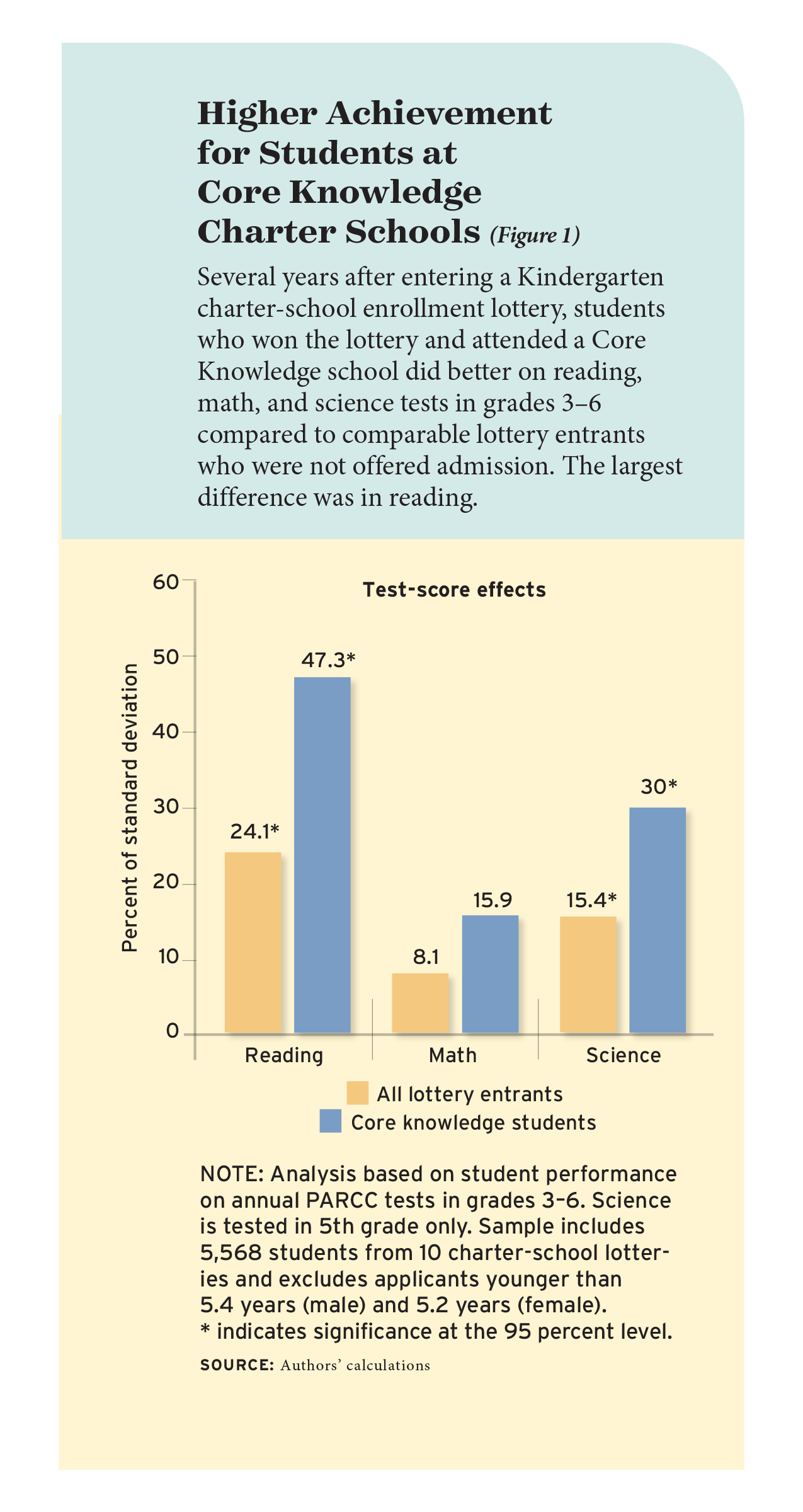
Children taught the Common Core became better at science and maths, which is perhaps expected, but they also became better than their peers (a lot better) at reading comprehension – and not just nonfiction reading but fiction too.
So, English leads, if you want to develop your school’s readers, talk to your science lead.
Ben

 Reading for Learning