
My Trust has an online reading programme which sets quizzes based on short texts. The pupils have a choice of text at the right level for them. The quiz pass rate is 8/10. We’ve analysed quiz data and compared it to reading assessment scores to see which groups of pupils make the most progress in reading age. What factor made the most difference?
- Prior reading attainment?
- Number of texts read?
- Number of quizzes passed?
The factor which correlated best to reading improvement was …. 3. The number of quizzes passed.
Why Are Some Readers Failing the Quizzes?
This week we’ve been observing the pupils who are not passing as many quizzes as their peers even though they are reading a lot of texts. Our approach isn’t subtle: we sat near the pupil with a notepad. We don’t speak but the pupils know we are watching.
Remarkably, all of the pupils we observed passed the quiz: one for the first time in months. The red dot shows the quiz we observed.
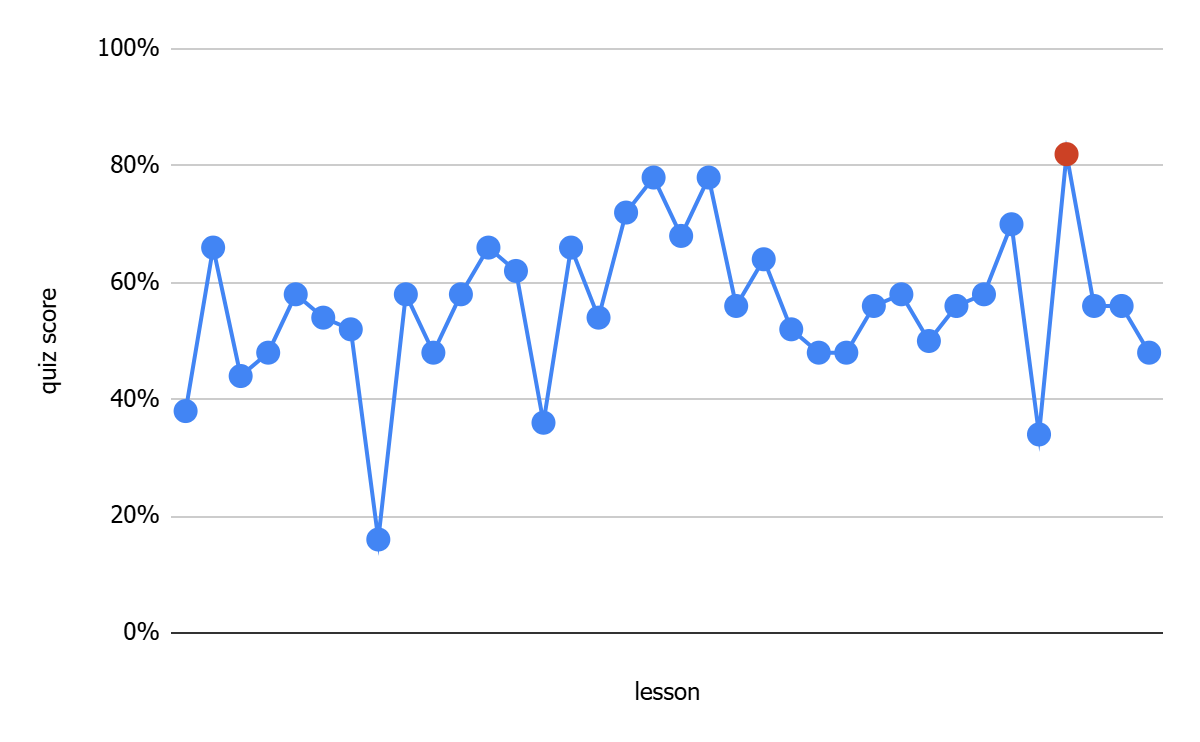
pupil #1
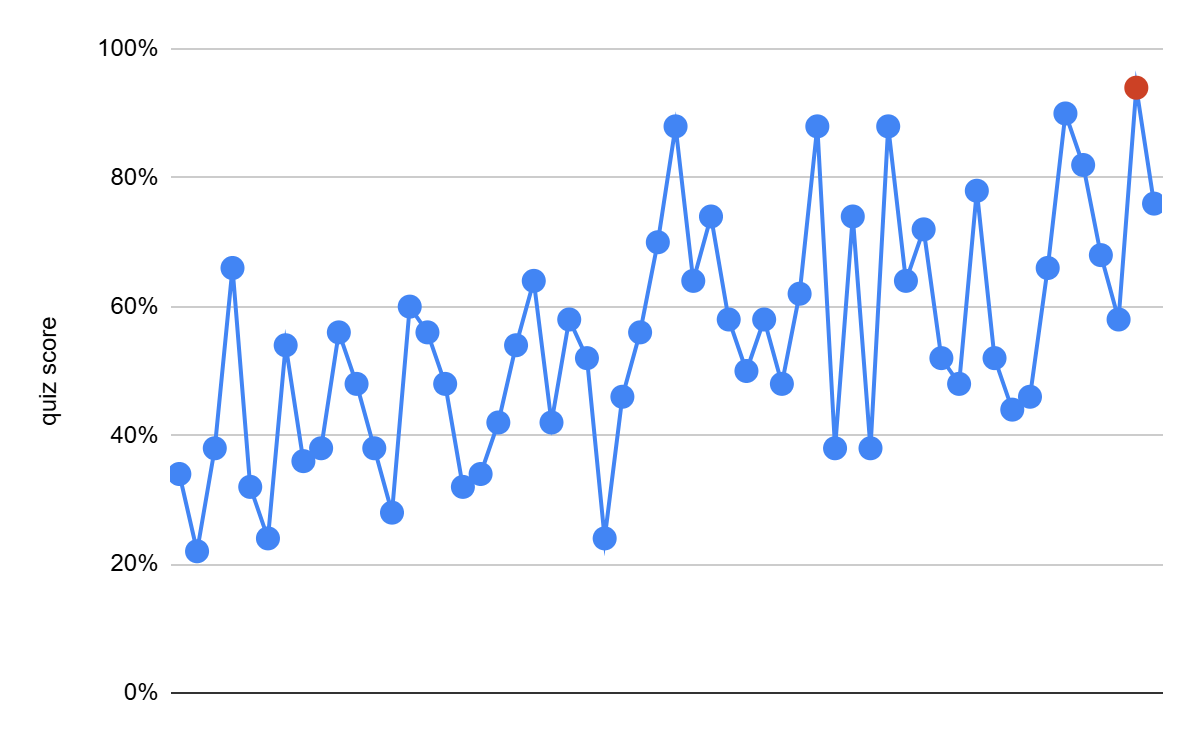
pupil #2

pupil #3
Conclusion
- Some pupils need a bit more support to read closely – comprehending a text takes effort.
- You can’t tell who is making enough effort just by watching – you need to measure something concrete – e.g. a quiz.
- Those who aren’t reading closely fall further behind their peers.
Therefore, if you are setting pupils a reading task, some will read carefully without any support, but a significant number will need support. A quiz alone isn’t always enough – your pupils need to know you are monitoring their performance constantly and holding them to account immediately (at the end of the quiz is too late).
The alternative to constant vigilance is to let weaker readers fall further behind. You can’t let any reader fall through the net.

 Reading for Learning