
In physics, sometimes the smallest words do the most work. This post is about three short, everyday words that powerfully link concepts together.
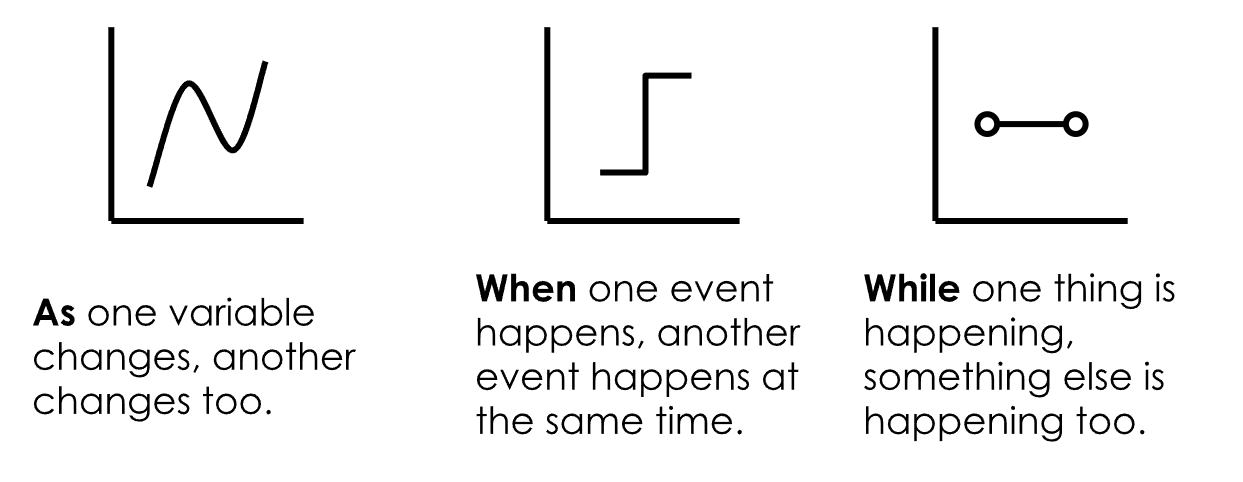
- As the voltage increases, the current through the resistor increases. (a relationship)
- When the switch closes, the bulb lights up. (two simultaneous events)
- While the switch is closed, the current flows. (two linked situations).
In grammar, as, when and while are conjunctions – they join two clauses together. In everyday English, the words often do similar jobs, but there is nuance in physics that many learners are likely to miss. These distinctions are important for a couple of reasons:
- This is how physicists communicate. Using the right conjunction lets you paint a graph with words.
- This is how GCSE exams ask questions – even foundation papers. I’ve tallied the use of ‘as’ in several recent past papers and found up to 5 examples in a single foundation physics paper.


AQA Foundation Physics GCSE
How you can teach ‘as’
You probably picked up the physics use of ‘as’ from repeated exposure – possibly long after GCSE. You probably haven’t even noticed that you are using it. But if GCSE questions use it, and if it helps improve communication, it’s worth spending a bit of time teaching it in class.
I suggest dropping it into a few DoNows – like the Writing Revolution’s “but, because so…” activity.
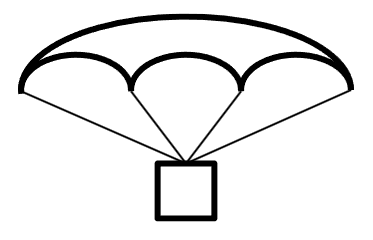
- When the parachute opens….
- As the parachute’s speed increases…..
- While gravity is larger than air resistance…
I’d also consider using a graphical image (like the graphs above) or even gestures to support your learners development of both the idea you are trying to convey, and the best language to explain it.
Ben

 Reading for Learning