
From categorising buttons to categorisation in science
“Pupils should be taught to explore and compare the differences between things that are living, dead, and things that have never been alive.”
Science programmes of study: key stages 1 and 2
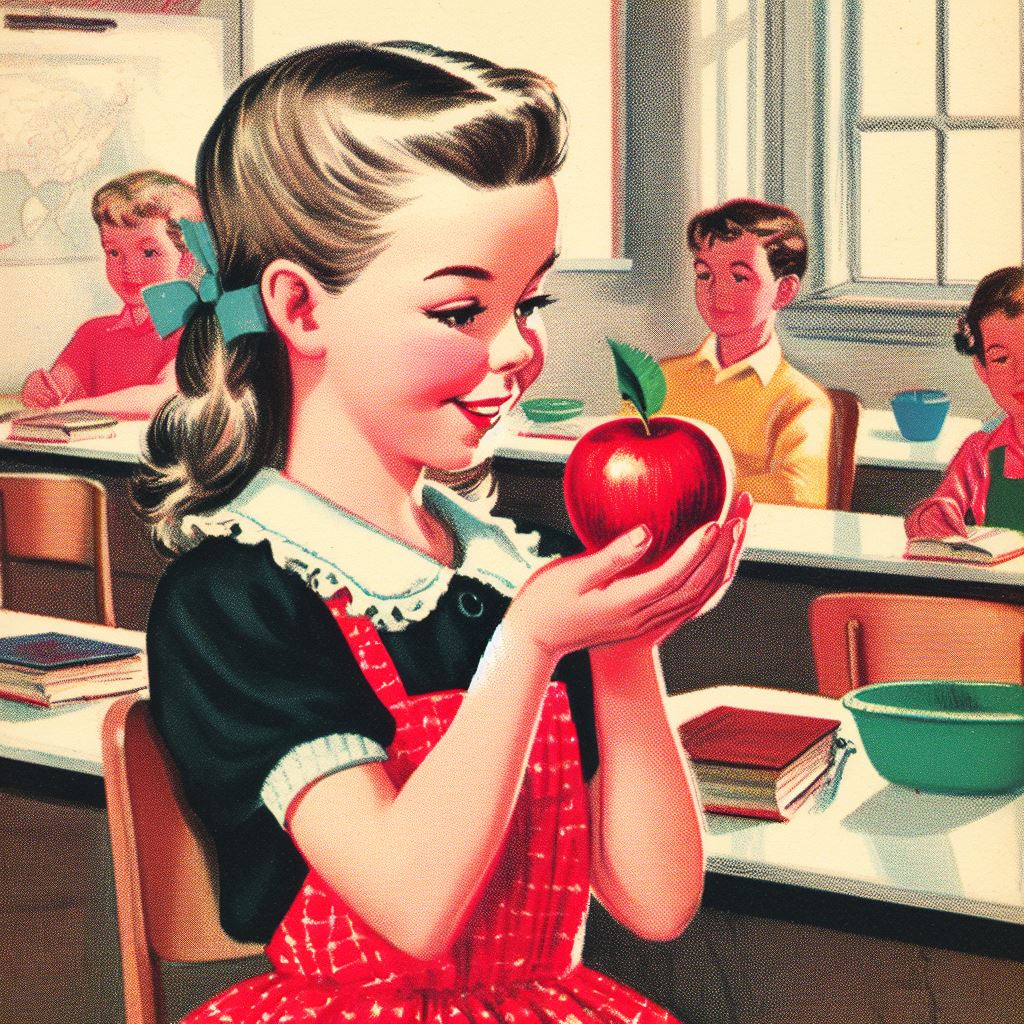
Young children often believe trains and tractors are living things and that trees are not. They typically grow out of the idea that machines are alive, but they generally need to be taught that plants are living organisms.
Categorisation is natural to humans: we categorise food into things we like and things we don’t; things we play with and things we don’t; things that are mine and things that are yours. This is why I’m skeptical about activities where children sort everyday objects, such as buttons, into categories. Any jump from simple categorisation to real-world categorisation is too difficult.
This is particularly true when we try to categorise items into living things and non-living things. Some things are simple – is a hamster a living thing or a non-living thing? Is a cup a living thing or a non-living thing?
It soon gets tricky though. The example I struggled with recently was: “Is an apple a living thing?” How would you know?
There are some questions and characteristics that can help:
- can it move? (no)
- can it grow? (yes)
- does it need food? (sort of – it gets nutrients from the tree it’s growing on)
- can it produce offspring? (yes – it has seeds inside)
You might use your teacher knowledge to say that it’s made from cells, so it must be alive.
The answer I came up with was: an apple isn’t an organism – it’s part of an organism. It’s alive when it’s growing on a tree, but it isn’t a living thing.
To make it even more complicated, it contains seeds, which grow into apple trees and so the seeds must be living things.
Why is this relevant for KS1 teachers?
Classification in the real world requires a lot of knowledge.
- Classifying bugs into insects: are woodlice insects? Are spiders insects? Are caterpillars insects?
- Classifying materials: when does a natural material become man-made? Is stone man-made when it’s cut into blocks? Is brick man-made? Is woolen fabric man-made? Is chipboard man-made?
- Classifying seasons: what are the differences between winter and spring? How warm does it need to be before we say spring has started? Can it snow in the spring? Can flowers come out in the winter?
Teaching categorisation as a separate enquiry skill is flawed. Sorting buttons teaches you how to sort buttons. It might give you some ideas about categorising, but nothing that will help you categorise anything in the natural world.
Practical advice for teachers
When teaching living things and non-living things, give lots of examples, but keep the examples really straightforward (especially at KS1):
- only use whole organisms as examples of living things (e.g. an apple tree, a hamster, a spider) and
- obvious non-living things ideally made out of materials which were never alive.
Every meaningful categorisation in science requires a lot of subject knowledge. Linneaus was the first to categorise living things into animals and plants in 1735. It wasn’t until 1969 that Whittaker suggested that fungi should be classified as a separate kingdom. Teach the knowledge your pupils need first and then show learners how scientists can apply it to help categorise. Don’t ask pupils to work it out for themselves.
Ben
Note on the images: I used AI, asking for 1960s Penguin book style, which I suppose is why the children are all white. Notice also the weird hoops and the creepy head on the back shelf!

 Reading for Learning
Hello Ben. Your piece caught my eye when it appeared on Teacher Tapp this week. In recent years in our school we’ve done quite a lot of CPD on primary science misconceptions. We’ve used Michael Allen’s book as the main source. One of the very first misconceptions in the book (1.2) is ‘An apple in a fruit bowl is not alive’. The text goes on to say that scientists now know that cut fruit secrete different chemicals according light conditions and different times of the day. So we teach that fruit, for a while at least, remains a living thing. Complex, isn’t it?
Regards
Pete
LikeLike
Yes! It’s a nightmare. The more you know, the harder it gets I think this doesn’t’ contradict my main message: classification of buttons gets you as close to scientific classification as climbing a ladder gets you to the moon,
LikeLike