
We should be reading more high quality books to children, but which books should we choose?
Literacy books, blogs and podcasts recommend using high quality texts. Who would disagree? But can we agree what quality means? This post is my think-aloud on what high quality looks like in primary science.
To start, I went to the library to see the children’s science books, but I was overwhelmed and my random selection wasn’t satisfying.
So instead I went to one of the best sources of wisdom. Mary Myatt has a list of recommended books; I bought three for Key Stage 2 Science.
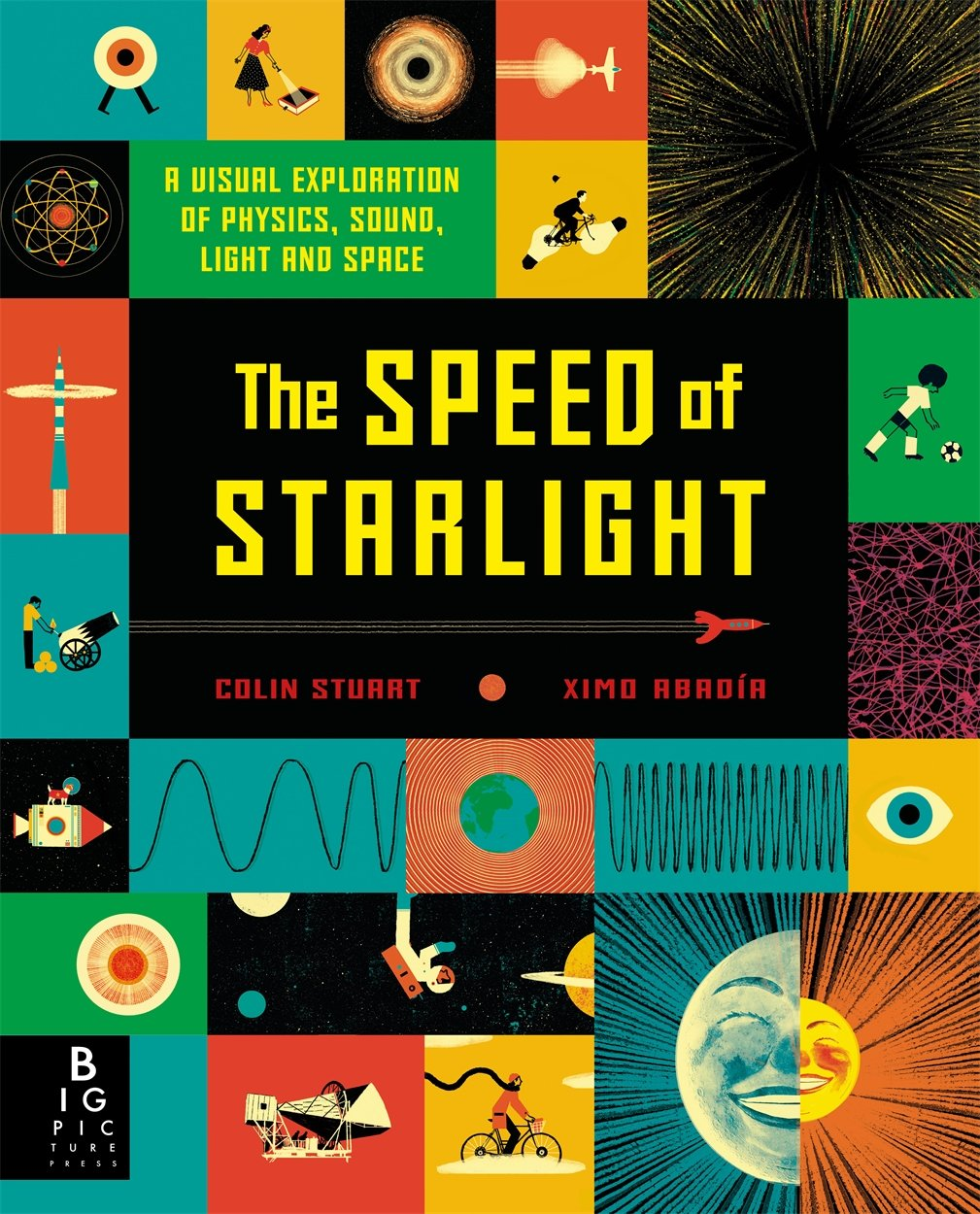
The Speed of Starlight by Colin Stuart
About the Author
Colin Stuart is a highly acclaimed astronomy author and speaker. He has written over 20 books that have been translated into 21 languages. He won The Margaret Mallett Award for Children’s Non-Fiction in 2020 and the Solar Physics Popular Media Award in 2022.
First Impressions
This is a lovely book, full of great physics and beautifully designed graphics.
Text Analysis
Style
The text reads like someone knowledgeable speaking: like a print version of the Royal Society Christmas lectures. The graphic design is beautiful.
Knowledge and Vocabulary
The text is not well aligned to the National Curriculum at Key Stage 2. It is full of concepts that readers won’t have encountered in primary school. In principle, this is a good thing: I find the National Curriculum for science unambitious and uninspiring. This book explains the why of physics – something lacking in key stage 2 science.
I worry that it goes too fast though. For example, in the paragraph below, the text assumes a lot of scientific knowledge.
“A speaker plays music by vibrating up and down, causing air molecules nearby to vibrate too. Then their neighbours, until eventually the air molecules next to your ears are also dancing. This is how sound travels as a wave through the air. These waves are around a million times slower than light travels, which is why you always see lightning before you see thunder.”
| Concept | Year / Key Stage Taught |
| Vibrations | Year 4 |
| Air molecules | KS3 |
| Waves | KS3 |
Does this matter? Research suggests that comprehension falls off a cliff when readers fall below a threshold (see How Much Science Knowledge is Too Little?). Primary teachers could use it in class, but they will need to be ready to fill in a lot of gaps. This is the dream (fantasy?) scenario.
Sentences
Loads of great physics sentences. There are causal sentences; embedded clauses adding information and prepositional phrases to communicate sequences. I intend to use them in science literacy lessons.
In Short
An amazing book that most children won’t be able to comprehend without some solid physics support. It would be an excellent resource for literacy teaching.
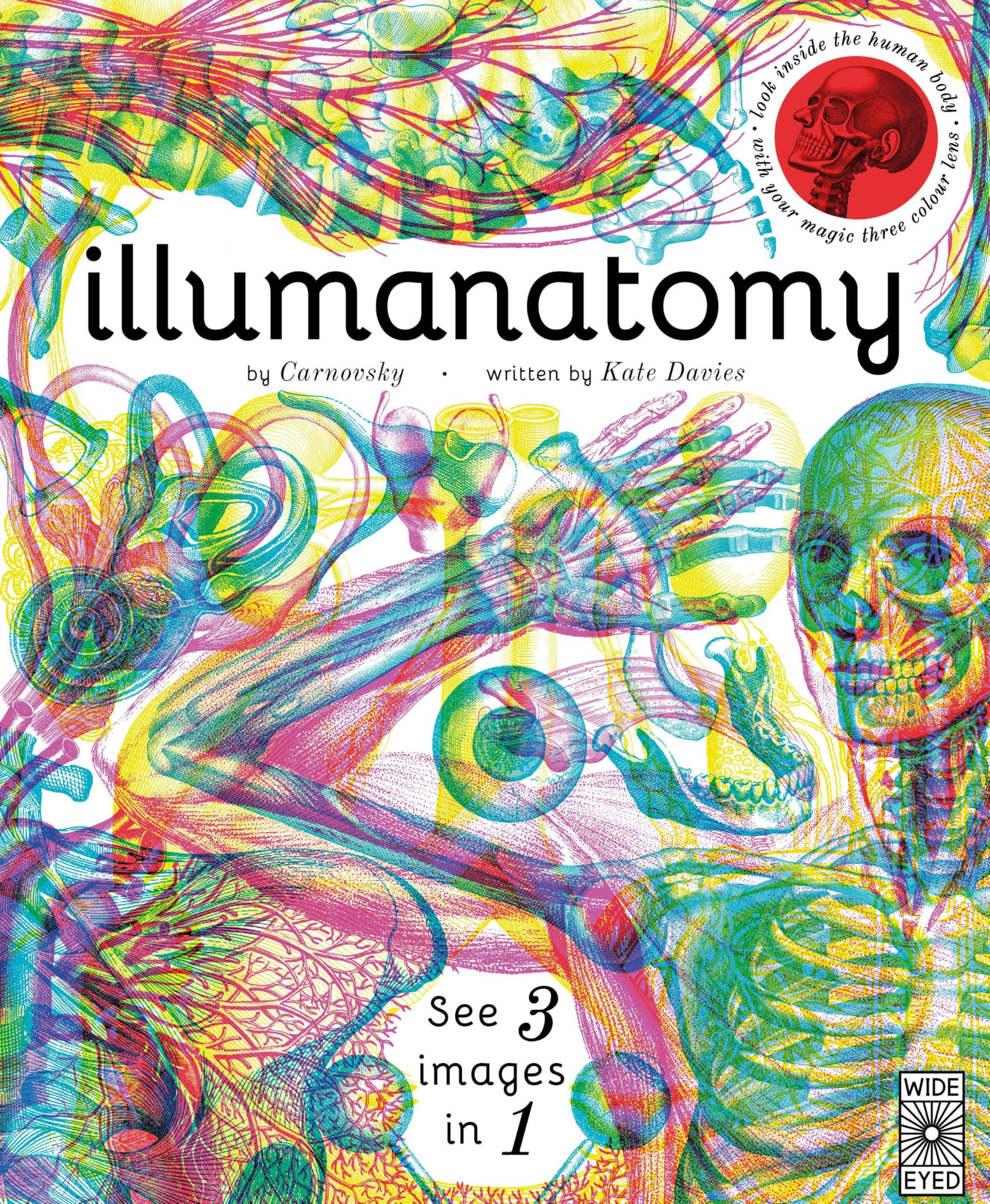
Illumanatomy by Kate Davies
About the Author
Davies has an amazing literary career. She writes fiction and non-fiction for adults and children; is an editor, writer and writing coach and has won awards.
First Impressions
It’s the images, not the words, which grabbed my attention. Shifting between the coloured filters as you stare at the images is an amazing experience. You can shift the view between the skeleton, muscles and organs. Everyone should have a go.
Text Analysis
Style
Although the colour filter images grab the attention, it’s the texts I love. There are brilliant one-pages on parts of the body. The centre of each page is a Victorian style line drawing with beautifully written annotations.
Knowledge and Vocabulary
This text is well aligned with the national curriculum for key stages two and three (and four). The knowledge is rich and very clearly explained.
Sentences
The sentences are precise and clear. Because they are labels, there isn’t a wasted word. These sentences are worth studying in class.
“Right ventricle: Forces deoxygenated blood into the pulmonary artery, so it can be carried back to the lungs.”
In Short
The one page explanations are perfect for teaching concepts and for model sentences to study. If you have this book, keep it safe: it would be a shame if the coloured filter went missing. Even if it did though, you would keep it for the text: clear, precise and illuminating.
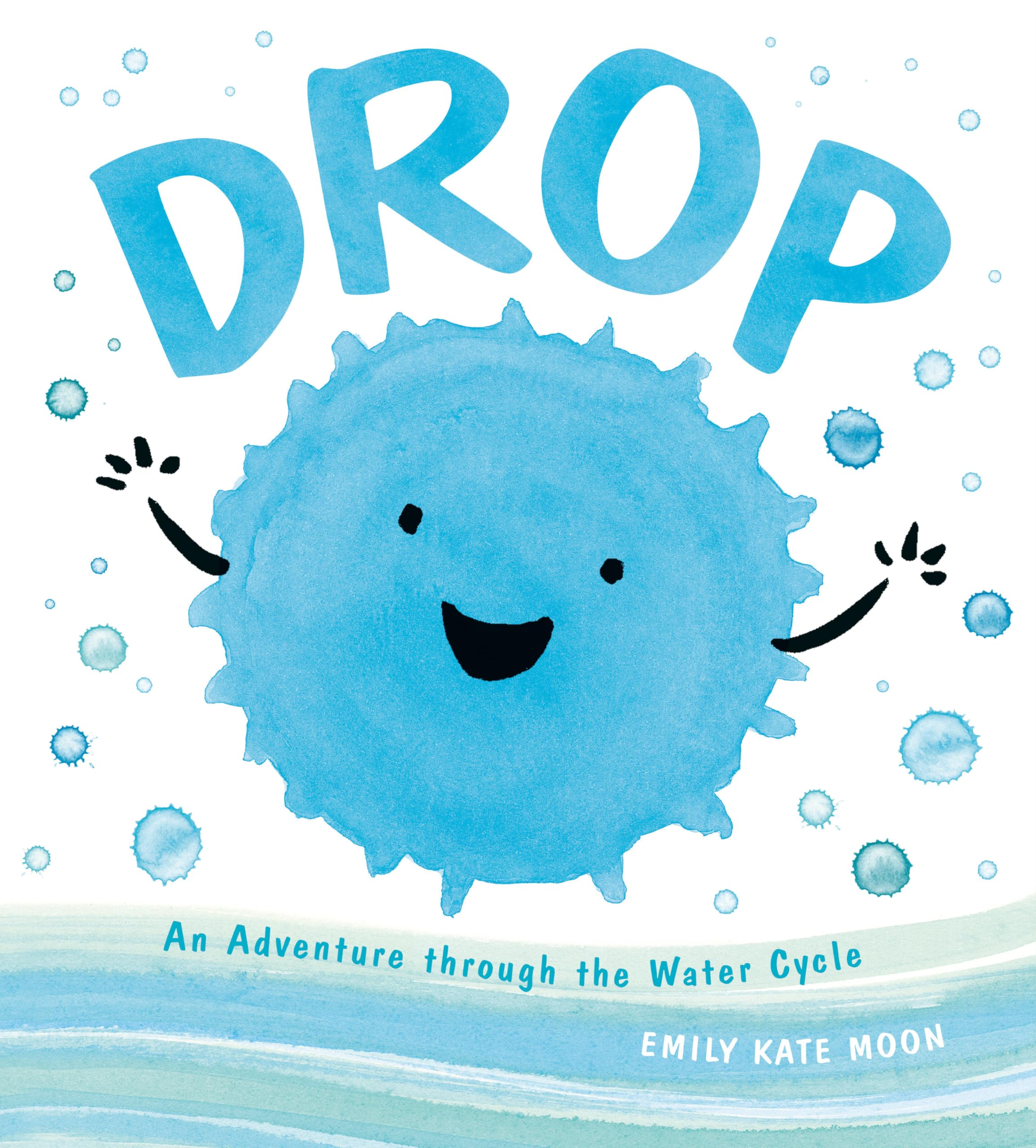
Drop by Emily Kate Moon
About the Author
Moon has written a series of science books for young children. She is a writer and illustrator.
First Impressions
A lovely story book for younger readers with a lot of great science hidden beneath the low challenge language. Also an anthropomorphic drop of water which I can’t get comfortable with.
Text Analysis
Style
The style of illustration and language is suitable for Key Stage 1, but the knowledge is for Key Stage 2. I think that’s fine. There are few words on a page and these are often blended with the illustrations. The main character is a water droplet.
Knowledge and Vocabulary
The knowledge in this book is well matched to year 3 and 4 in the National Curriculum. When I ordered this book, I thought I wouldn’t like it, but the science content is great. It’s a book about the water cycle and it has some great geography and plant science too.
The water droplet starts in the ocean, evaporates and then condenses into cloud droplets before precipitating. The story cleverly explores the options of where she might end up: in rivers, lakes, glaciers.
“She could sink down to the bedrock and rest with the groundwater. Or she might fall into a forest and be absorbed by plants and eaten by animals.”
So the content is excellent – complex and rich. The scientific terminology (evaporation etc.) is in an extra double page at the back.
I like this approach: understanding before vocabulary. Scientific vocabulary is the label for the concept. We often attempt to do this the other way around. This is better.
Sentences
Because the book is gently teaching hard concepts, the sentences are clear and precise.
“If she falls in a forest, she may trickle down a tree and soak into the soil.”
“If she freezes into snow or ice, she may be stuck somewhere for thousands of years.”
Sometimes though, I feel uncomfortable. Does the anthropomorphic language belong in a science text?
“The sun fills Drop with energy. She gets all warm and wiggly. Then she pops off the surface of the water and floats into the air.”
While my instinct says no, there is great research suggesting that using fictionalised stories can teach young children abstract concepts (Vaunam P. Venkadasalam & Patricia A. Ganea (2018))
In Short
This book scores really well on science content. I’d use it as a story book for Key Stage 1 children to build background knowledge. Then I’d re-read it with my older children to reheat the concepts and explicitly draw out the science. This is when I’d add the scientific vocabulary as labels for the concepts.
Conclusion
All of these books are quality texts though they are all different and would require different classroom strategies to get the most out of.
They are all beautifully illustrated and appealing. I’m less interested in that though. The science is the important thing.
Thanks for reading,
Ben

 Reading for Learning