
Let’s say you’ve got a class full of students who are strong readers. You give them a text that you think is straightforward and on a subject they know. How well will they comprehend the text?
Just because they can comprehend, doesn’t mean they will. It isn’t naughtiness—no doubt you do it, too. Comprehension is hard work, and sometimes we just go through the motions.
How can you support your students to comprehend more deeply?
“When thought overflows the mind, the mind puts it in the world” Tversky
Whenever you can take comprehension out of your students’ minds, and put it into the real world in front of them, you are making comprehension visible. This helps them check their own mental models and it also lets you check, quickly and efficiently, what’s going on in their heads.
Energy Example
Your students are reading a short text about energy.
As the cyclist accelerates, the chemical energy store in the cyclist’s body decreases and the kinetic energy of the cyclist increases.
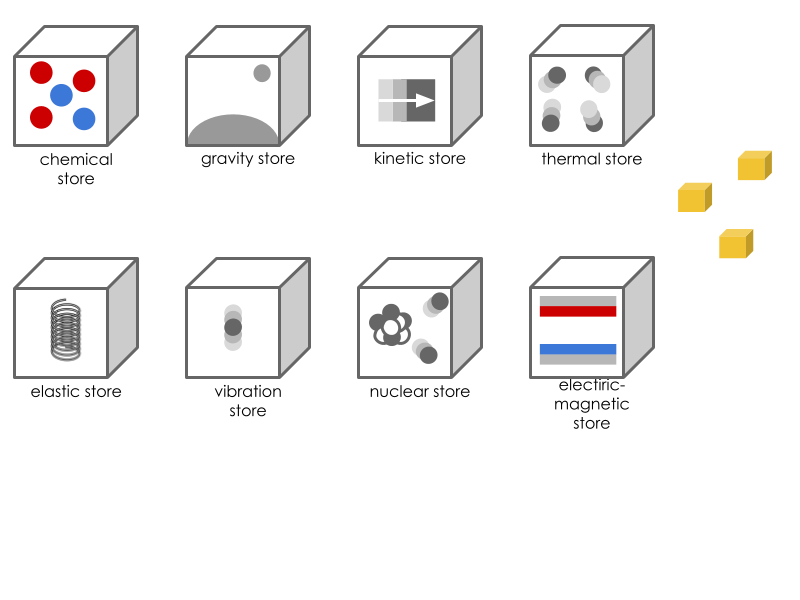
- The cubes represent energy. In the text, where do the cubes start? Put the cubes there.
- Where does the energy end up? Put the cubes there.
| 2 Useful Terms Situation Model: When we read (or listen) we build a mental model of what the text is saying. It’s not just the words in the text: we use what we already know to build a model of the situation. This is called the situation model. Standards of Coherence: the standard of coherence is the level of comprehension a reader expects to achieve. When you read, your brain constantly monitors the “flow” of information. If the new sentences you read don’t fit with what you’ve already processed, your “coherence alarm” goes off. This monitoring takes effort. Our personal standard of coherence will depend on:Whether we have to do something with the information;How much we already know andHow much we care. |
Forces and Motion Example
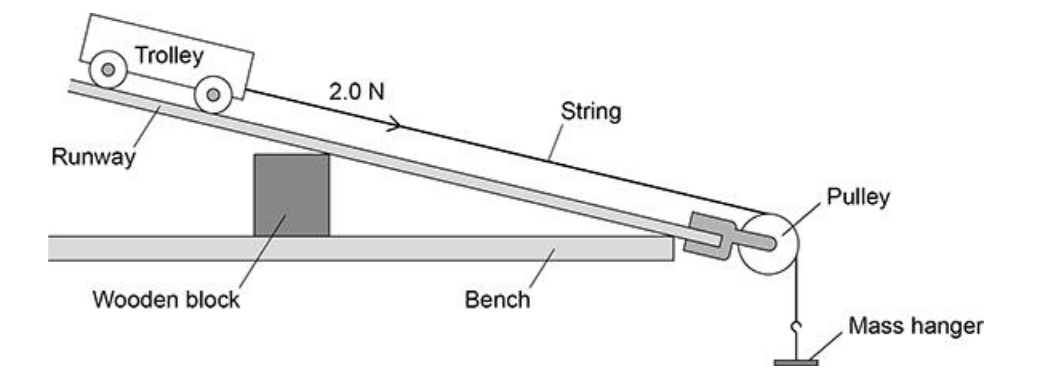
As the runway gets steeper, the force provided by the string does not change, however, the forward force due to gravity increases. So the total forward force increases. Therefore, the steeper the runway, the greater the acceleration.
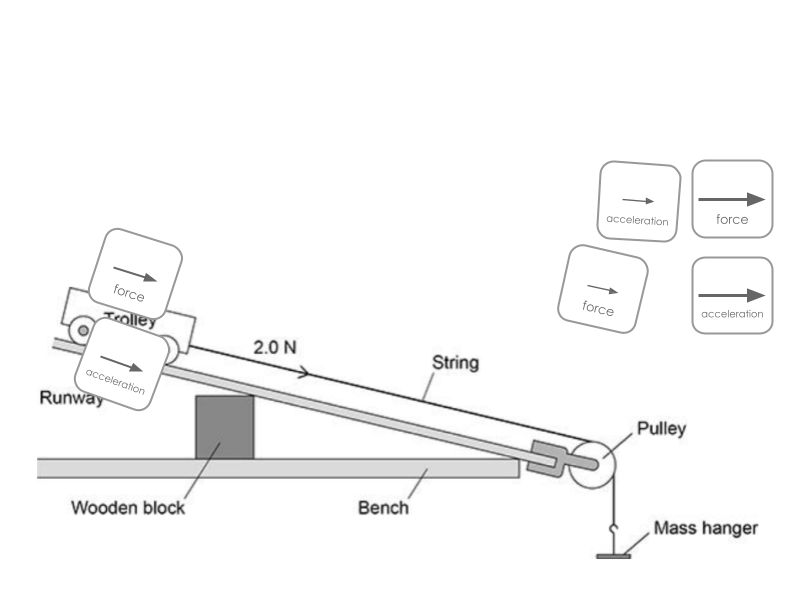
Students using force and acceleration tokens to make comprehension visible.
Conclusion
Physics is full of abstract terms. When students read a text (e.g. an exam question), try to make a physical representation for them to manipulate to help them build a better mental model and to help you check their comprehension.
I hope that’s useful!
Ben

 Reading for Learning