
My Trust (Paradigm) is trialing short Read-Aloud texts in KS2 science lessons. Each unit has 6 short teacher read-alouds which: … More
Category: learning
Trying to understand why ‘Progressive’ and ‘Traditional’ teachers disagree
I’ve been re-reading a couple of books by ‘progressive’ academics who have been celebrated for trying to bride the gap … More
Using story books to overturn science misconceptions in young children
This is an amazing piece of research. The researchers were able to show that children as young as four are … More
Where Does Enquiry Belong?
Short answer: in science lessons, use enquiry once pupils already know the content. You might ask: Why use a pedagogical … More
A Reflection on “The 10 Key Issues with Children’s Learning in Primary Science in England” (Bianchi, Whittaker and Poole: 2021)
This post is a reflection on the publication by Bianchi, Whittaker and Poole’s publication in March 2021 (here). This publication … More
The Problem Solving Methods Learners Use – and How to Develop Them
Solving problems, especially in physics, has been well studied (e.g. Larkin, McDermott, Simon and Simon 1980: here and Chi, Glaser … More
Cartoons and Abstract Visuals
Barbara Tversky (Minds in Motion) discusses the cognitive power of cartoons to explain abstract concepts. In these three images, I … More
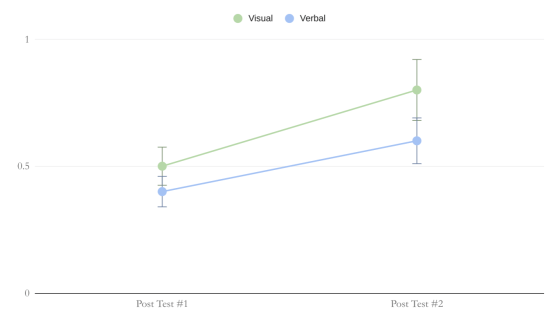
Using Visual Explanations Leads to Better Performance
I have been listening to Barbara Tversky’s wonderful new book: Mind in Motion, about the roots of thinking in the … More
Up and Down the Ladder of Abstraction
Yesterday I wrote about the importance of physical, experiential knowlegde of physics: a sense of forces and flow; of motion … More
A Short Booklet on What Research Says About Using Visuals in Teaching
Dear all, I have been thinking hard (and reading a lot) about using visualisations in class. Here is a booklet … More
 Reading for Learning