
In February 2023, Ofsted published its findings about primary and secondary science in England (here). It’s a long report, and others have summarised it albeit selectively (e.g. here and here).
I am picking on one element of their findings – disciplinary knowledge.
Disciplinary knowledge: refers to what pupils learn about how to establish and refine scientific knowledge, for example by carrying out practical procedures. By identifying and sequencing this knowledge, it is possible to plan in the curriculum for how pupils will get better at working scientifically throughout their time at school.
https://www.gov.uk/government/publications/subject-report-series-science/finding-the-optimum-the-science-subject-report–2
Ofsted’s definition of disciplinary knowledge is a restricted one – it describes a sausage machine view of the nature of science where there are a limited number of well defined processes that scientists are supposed to use, turn the handle and out pops the knowledge.
This isn’t just a simplification – all of school science is a simplification – it’s incorrect and much less interesting than reality. Progress in science is far messier and more human than Ofsted is letting on.
Real science is probably best understood through examples from the history of science – stories. The story of electricity is a good example – it needn’t take much lesson time, but a timeline with some key developments included would help pupils anchor their understanding in a narrative.
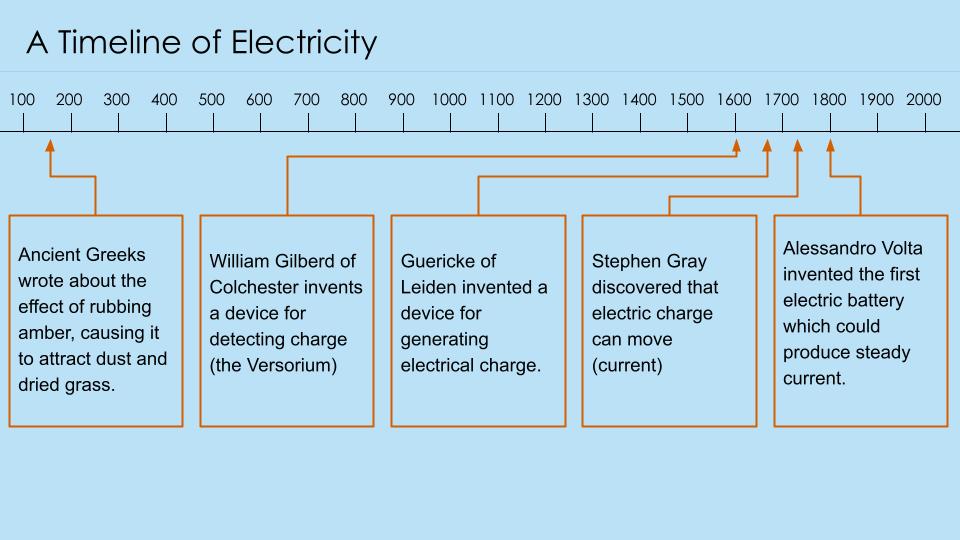
There is plenty that could be said about each of these inventions and discoveries. For example:
I also think we owe it to pupils to understand how philosophers understand the nature of science. Here is my post summarising four key philosophies of science – Ofsted’s view on the nature of science is largely that of Frances Bacon from the 17th century. We’ve learnt a lot since then.
If we want our students to leave school really understanding how science works, we can’t just teach them Bacon’s sausage machine version of science – it doesn’t explain why science sometimes gets it wrong, or why knowledge is provisional. Instead, teach them that science is an incredibly powerful, but still very human way of discovering the truth. It take time and often takes the wrong path. It’s not perfect, and we should all know why it isn’t perfect.
(If you want to know where to read more history of science stories, my book has a lot (The Big Ideas of Physics and How to Teach Them). Richard Brock’s Stories from Physics booklets are marvelous too.
Ben

 Reading for Learning