
Physicists have a terrible reputation for being bad communicators. Physics English is known for being dense and impenetrable. Everyone loves a great physics communicator like Jim Al-Khalili and Brian Cox. Why can’t we all speak like that?
Physics has at least three literacy challenges. First, everyday English isn’t brilliant at expressing how physics works. Physics English has evolved to be more specific and precise. Two: the human brain can’t cope with several new items at once. Physics often involves multiple ideas at once. A third challenge is that English is the language of physics academia – academic physics English is spoken by a large number of people for whom English is a second language.
Physics English solves these problems with a few tricks. In this blog I have unpicked three: nominalisation, noun phrases and prepositional phrases.
Have a look at the two sentences below:
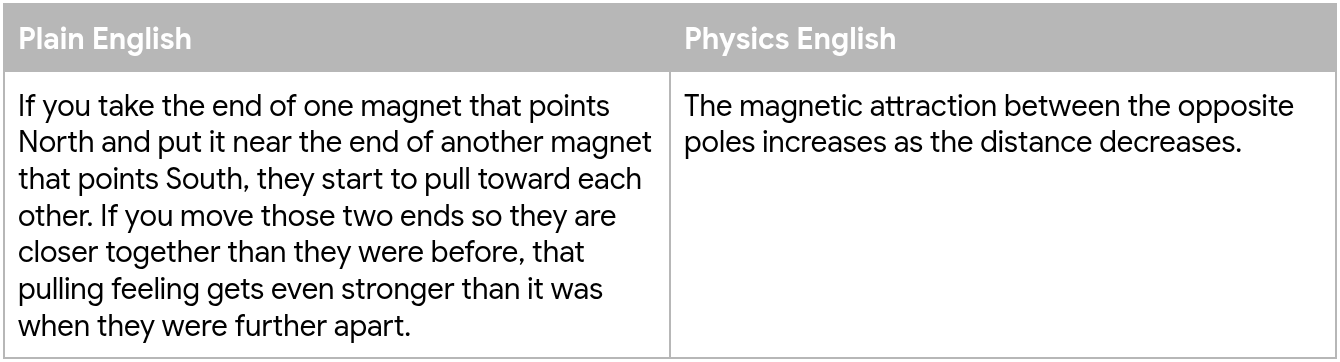
Both texts say the same thing. Notice how efficient the physics English is.
Trick 1: Turning Verbs (to Attract) into Nouns (Attraction)
Linguists (who love a long word) call this trick nominalisation. It works really well for physics because nouns are things we can think about more easily. A noun takes up one slot in the working memory, whereas a verb with its subject takes up more.
Trick 2: Bunching Adjectives with Nouns (Magnetic Attraction and Opposite Poles)
(Aka: extended noun phrases).
Physicists make their nouns more precise by adding adjectives to their nouns, creating a single mental object with clear detail. Magnetic attraction and opposite poles count as a single concept each in your working memory. In the everyday English text, these concepts take several sentences to construct with lots of opportunities for misunderstanding.
Trick 3: Prepositional Phrases (Between Opposite Poles)
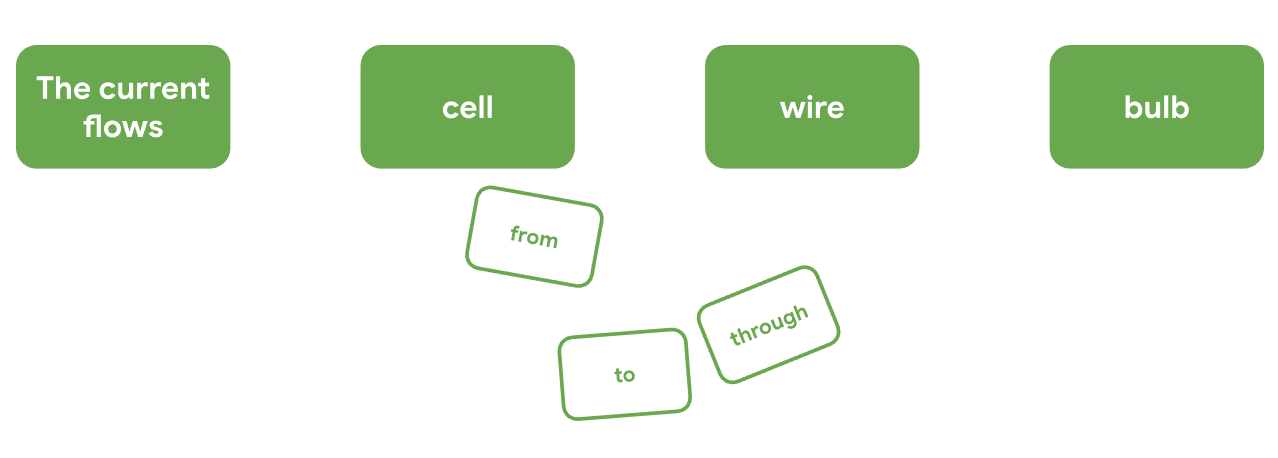
The third trick is to make good use of prepositions to describe where and when the phenomenon is happening. In the physics sentence above, the attraction is between the poles. Here are some more examples:
- The current flows from the cell, thorough the wires, to the bulb.
- The projectile accelerates towards the Earth until after 30s it is at terminal velocity.
When is Physics English Too Efficient?
Short isn’t necessarily good. To understand the physics sentence above, a reader needs to understand:
- magnetic attraction;
- magnetic poles and
- the way ‘as’ works to join the two clauses together (see my blog As, when, while: three small words that unlock meaning in physics).
Without this, the sentence stops being efficient and becomes impenetrable.
What Should Physics Teachers Do?
- Understand the knowledge demands of what your students are listening to or reading. Don’t try to teach more complex concepts before they have mastered the elements that make them up. (For more, read my post How Much Science Knowledge Is Too Little?)
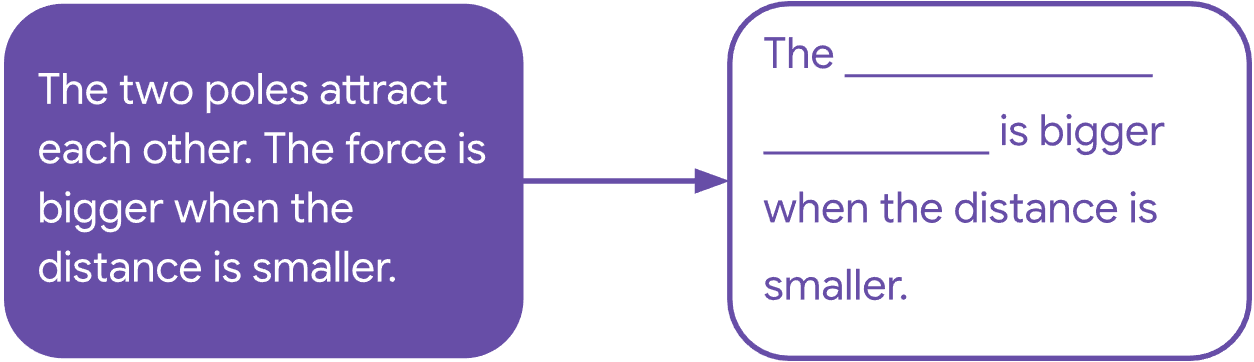
- Practise turning verbs into nouns and constructing extended noun phrases.
- Practise using prepositional phrases.
I hope that’s useful! Ben


